Braunschweig: Large-Scale Metal Hydride Storage System Complements H2 Research Infrastructure

The Lower Saxony Research Center for Automotive Engineering (NFF) at the Technical University of Braunschweig has received a large-scale metal hydride storage system for hydrogen. The facility is part of the “Hydrogen Terminal Braunschweig” project, which conducts research across the entire hydrogen value chain. With a total capacity of up to 500 kilograms, it is, according to the university, one of the largest research facilities of its kind in the world.

by | May 28, 26

The storage tank is designed to hold 500 kilograms of hydrogen.
© Technical University of Braunschweig
Braunschweig Metallhybrid-Großspeicher ergänzt H2-Forschungsinfrastruktur

The storage system is based on a technology in which hydrogen is bound within metal structures. This enables compact, long-term storage at relatively low pressure while also increasing operational safety.

Part of the “Hydrogen Terminal Braunschweig” research project

The metal hydride storage system is part of the collaborative project “Hydrogen Terminal Braunschweig, ” which serves as a research platform covering the entire hydrogen value chain.

The storage systems are designed to be used in future research projects as well. One such project is “JaWoll” (“Hunting and Gathering—Processed Hydrogen from Research Projects for Supplying Large-Scale Equipment via Electrochemical Compression and Metal Hydrides”) by the German Research Foundation (DFG). The project focuses on the efficient use of hydrogen-rich residual gases in test and infrastructure environments: Approaches to recovery and recycling are intended to increase overall efficiency.

Connection to the electrolyzer and pipeline infrastructure

The necessary hydrogen will be produced via electrolysis using renewable energy at the “Hydrogen Terminal Braunschweig” site near the NFF. It will be transported directly to the new metal hydride storage facility at the research center via an existing pipeline infrastructure.

“The combination of production at the terminal and consumption at the NFF serves as a prime example of how an integrated hydrogen infrastructure can be designed in the future,” said David Sauss, managing director of the Steinbeis Innovation Center energieplus, which is coordinating the joint project as the project owner.

After delivery, the storage unit is scheduled to be connected and gradually prepared for operation over the coming weeks.


(Source: Technical University of Braunschweig/2026)

Image source, unless indicated in the image above:

Subscribe to the newsletter now

Fuel for your knowledge, delivered to your inbox every week.

Sign up here

H2 Projects in Your Region

More than 300 hydrogen projects in Germany and Europe

Click here for the interactive map

„Die technische Machbarkeit ist nachgewiesen, die größte Herausforderung liegt im Markthochlauf“

Vom Abgassystem zur Brennstoffzelle: Purem by Eberspächer bringt seine Erfahrung aus der Akustik- und Abgasreinigungstechnik gezielt in den Wasserstoffbereich ein. Im Interview erklärt Patrick Schaller, Product Director für Wasserstoffanwendungen und -komponenten, wie der De-Hydrator die Dampfbildung an Brennstoffzellenfahrzeugen reduziert und wie der Hydrogen Recirculation Blower (HRB) durch Rezirkulation von Wasserstoff die Effizienz steigert. Beide Technologien haben bereits erste Praxistests bestanden. Ende Oktober präsentiert Purem by Eberspächer beide Lösungen live auf der Hydrogen Technology World Expo in Hamburg.

Read more
Thyssenkrupp Nucera zentralisiert Montage von Elektrolysezellen

Das Anlagenbauunternehmen Thyssenkrupp Nucera AG & Co. KGaA errichtet nach eigenen Angaben erstmals ein Montagezentrum für Elektrolysezellen in Europa. Der sogenannte „Assembly Hub“ liegt im portugiesischen Vila Nova de Gaia und soll 2028 den Betrieb aufnehmen. Beliefert werden sollen vor allem europäische Elektrolyseprojekte, darunter das Vorhaben „Onuba“.

Read more
BMW-Werk in Leipzig erhält Anschluss an Wasserstoff-Kernnetz

Das BMW Group Werk Leipzig soll ab dem ersten Halbjahr 2028 direkt über eine Pipeline mit Wasserstoff versorgt werden. Dafür hat Ende September der symbolische Baustart einer rund zwei Kilometer langen Leitung stattgefunden. Die Pipeline soll an das nationale Wasserstoff-Kernnetz angeschlossen werden. Nach Angaben der BMW AG ist das Werk in Leipzig das erste Automobilwerk weltweit, das direkt per Pipeline mit Wasserstoff versorgt wird.

Read more

H2 Talk

„Die technische Machbarkeit ist nachgewiesen, die größte Herausforderung liegt im Markthochlauf“
„Wir wollen e-Fuels vom teuren Nischenprodukt zu einer wettbewerbsfähigen Lösung entwickeln“
„Der Mittelstand ist das Kraftwerk unserer Wirtschaft"

Publications

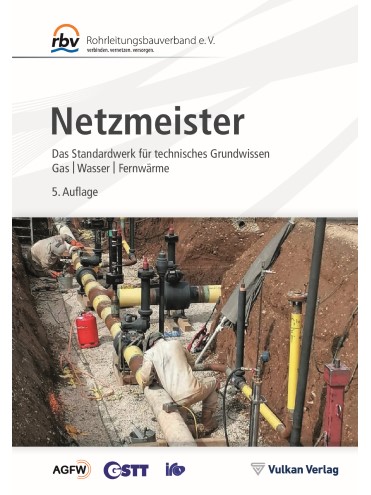
Netzmeister 2023

Net Master 2023

Year of publication: 2023

The network manager is responsible for maintaining the gas, water, and district heating pipeline networks, which account for by far the largest portion of utility companies' fixed assets. To meet the daily demands ...

About the Product

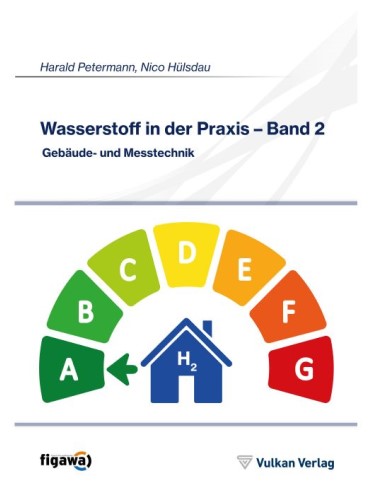
Wasserstoff in der Praxis, Bd. 2: Gebäude- und Messtechnik

Hydrogen in Practice, Vol. 2: Building and Measurement Technology

Year of publication: 2022

The book series “Hydrogen in Practice” provides practitioners with important information on the state of the art and future developments. Volume 2 focuses on the topics of “Building Services Engineering” and “Measurement Technology.” The ...

About the Product

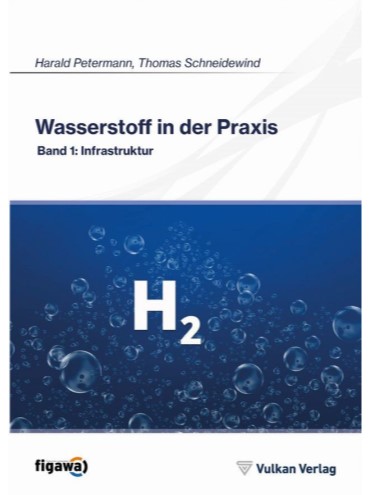
Wasserstoff in der Praxis, Bd. 1: Infrastruktur

Hydrogen in Practice, Vol. 1: Infrastructure

Year of publication: 2021

The book series “Hydrogen in Practice” provides practitioners with important information on the current state of the art and future developments. Volume 1 outlines the challenges that hydrogen poses for the gas infrastructure and the ...

About the Product