Baden-Württemberg Unveils Plan for Hydrogen Supply

In the spring of 2026, Baden-Württemberg published a hydrogen supply plan. With this plan, the state aims to further support the development of its hydrogen economy. Among other things, the plan outlines infrastructure measures as well as local and international supply routes.

by | May 8, 26

The Neckar River near Heidelberg, Baden-Württemberg.
© Pixabay
Baden-Württemberg legt Konzept für Wasserstoffversorgung vor

Baden-Württemberg has set a goal of becomingnet greenhouse gas neutral by 2040. In 2020 , the state cabinet therefore adopted the “Baden-Württemberg Hydrogen Roadmap.” This roadmap outlines specific goals and measures for expanding the hydrogen economy in the state.

The Baden-Württemberg Ministry of the Environment, Climate, and Energy has now published the “Hydrogen Supply Concept for Baden-Württemberg, ” which is intended to supplement the roadmap.

State Sees the Need for Reliable Demand

In the plan, the state government emphasizes the importance of reliable demand. Prices on the demand side and investment costs for production facilities would therefore need to gradually converge. The demand figures collected would serve as initial indicators of future trends in hydrogen demand.

To ensure planning certainty, the state government intends to supplement forecasts of hydrogen demand in Baden-Württemberg with studies and surveys. At the federal level, it is also recommended that demand be reviewed regularly as part of the “Gas and Hydrogen Network Development Plan.”

Rhine Railway: Baden-Württemberg Calls for an Extension of the Core Network

The state government also points out that an appropriate regulatory and financial framework is necessary for the development of anH2 pipeline infrastructure.

It therefore recommends that the federal government optimize the financing terms for investments by transmission system operators in the hydrogen core network . In addition, further connections in southern Baden-Württemberg should be taken into account, particularly the extension of the core network along the Rhine corridor.

In addition, the establishment and expansion of a hydrogen distribution network should be supported through regulatory and financial measures and incorporated into the “Gas and Hydrogen Network Development Plan.” According to the state government, hydrogen storage capacities would also need to be reviewed.

Plans to Expand Hydrogen Hubs

Regional and local hydrogen production is intended, in particular, to meet demand that arises either before hydrogen networks become operational or outside their service areas .

According to the state government, local production must be designed in such a way that it can be operated economically in the medium to long term. The key factors here are, above all, capital costs, available infrastructure, the cost of procuring renewable electricity, and the operating hours of the electrolyzer.

The state therefore plans to further expandits hydrogen hubs. Lower electricity costs for operating electrolysers would also be a key focus.

Meeting Long-Term Demand Through Imports

According to the state government’s assessment, international imports will account for the majority of the hydrogen supply in Baden-Württemberg in the medium to long term. The goal is to establish stable supply relationships and diversify sources of supply.

The state also intends to promote the development of a global hydrogen market and further expand partnerships. In addition, it plans to support federal government initiatives and instruments. The state government also believes that auction models such as“H2Global” should be further developed so that they are accessible to small and medium-sized enterprises (SMEs) as well.

In addition, the state government intends to support the international activities of companies in Baden-Württemberg —both in the import of hydrogen and the export of technologies.

Imports are to be transported via European pipelines

To facilitate the import of hydrogen into Baden-Württemberg, the state government is focusing on the expansion of European pipeline corridors. It also recommends the development, at the EU level, of a suitable financing instrument for the“European Hydrogen Backbone.”

In addition to pipeline connections, hydrogen could also be transported by ship, rail, or truck. The state government intends to monitor and analyze these import routes.


(Source: Baden-Württemberg Ministry of the Environment, Climate, and Energy/2026)

Image source, unless indicated in the image above:

Subscribe to the newsletter now

Fuel for your knowledge, delivered to your inbox every week.

Sign up here

H2 Projects in Your Region

More than 300 hydrogen projects in Germany and Europe

Click here for the interactive map

„Die technische Machbarkeit ist nachgewiesen, die größte Herausforderung liegt im Markthochlauf“

Vom Abgassystem zur Brennstoffzelle: Purem by Eberspächer bringt seine Erfahrung aus der Akustik- und Abgasreinigungstechnik gezielt in den Wasserstoffbereich ein. Im Interview erklärt Patrick Schaller, Product Director für Wasserstoffanwendungen und -komponenten, wie der De-Hydrator die Dampfbildung an Brennstoffzellenfahrzeugen reduziert und wie der Hydrogen Recirculation Blower (HRB) durch Rezirkulation von Wasserstoff die Effizienz steigert. Beide Technologien haben bereits erste Praxistests bestanden. Ende Oktober präsentiert Purem by Eberspächer beide Lösungen live auf der Hydrogen Technology World Expo in Hamburg.

Read more
Thyssenkrupp Nucera zentralisiert Montage von Elektrolysezellen

Das Anlagenbauunternehmen Thyssenkrupp Nucera AG & Co. KGaA errichtet nach eigenen Angaben erstmals ein Montagezentrum für Elektrolysezellen in Europa. Der sogenannte „Assembly Hub“ liegt im portugiesischen Vila Nova de Gaia und soll 2028 den Betrieb aufnehmen. Beliefert werden sollen vor allem europäische Elektrolyseprojekte, darunter das Vorhaben „Onuba“.

Read more
BMW-Werk in Leipzig erhält Anschluss an Wasserstoff-Kernnetz

Das BMW Group Werk Leipzig soll ab dem ersten Halbjahr 2028 direkt über eine Pipeline mit Wasserstoff versorgt werden. Dafür hat Ende September der symbolische Baustart einer rund zwei Kilometer langen Leitung stattgefunden. Die Pipeline soll an das nationale Wasserstoff-Kernnetz angeschlossen werden. Nach Angaben der BMW AG ist das Werk in Leipzig das erste Automobilwerk weltweit, das direkt per Pipeline mit Wasserstoff versorgt wird.

Read more

H2 Talk

„Die technische Machbarkeit ist nachgewiesen, die größte Herausforderung liegt im Markthochlauf“
„Wir wollen e-Fuels vom teuren Nischenprodukt zu einer wettbewerbsfähigen Lösung entwickeln“
„Der Mittelstand ist das Kraftwerk unserer Wirtschaft"

Publications

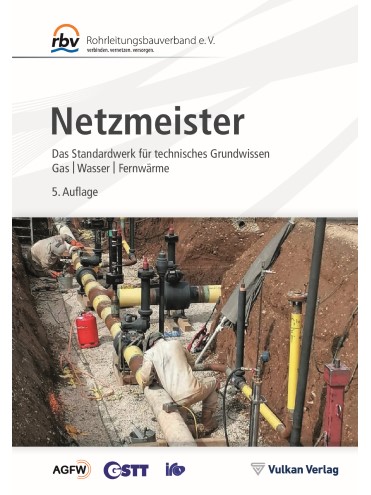
Netzmeister 2023

Net Master 2023

Year of publication: 2023

The network manager is responsible for maintaining the gas, water, and district heating pipeline networks, which account for by far the largest portion of utility companies' fixed assets. To meet the daily demands ...

About the Product

Wasserstoff in der Praxis, Bd. 2: Gebäude- und Messtechnik

Hydrogen in Practice, Vol. 2: Building and Measurement Technology

Year of publication: 2022

The book series “Hydrogen in Practice” provides practitioners with important information on the state of the art and future developments. Volume 2 focuses on the topics of “Building Services Engineering” and “Measurement Technology.” The ...

About the Product

Wasserstoff in der Praxis, Bd. 1: Infrastruktur

Hydrogen in Practice, Vol. 1: Infrastructure

Year of publication: 2021

The book series “Hydrogen in Practice” provides practitioners with important information on the current state of the art and future developments. Volume 1 outlines the challenges that hydrogen poses for the gas infrastructure and the ...

About the Product

Privacy Policy
h2-news.de, owned by Vulkan-Verlag GmbH (headquartered in Germany), would like to process personal data using external services. This is not necessary for using the website, but it allows for even closer interaction with you. If you wish, please make a selection:
Privacy Policy
h2-news.de, owned by Vulkan-Verlag GmbH (headquartered in Germany), would like to process personal data using external services. This is not necessary for using the website, but it allows for even closer interaction with you. If you wish, please make a selection: